

Feng shui promotes a clear mind and allows your space to transform into a relaxing sanctuary where you can rest without unnecessary clutter and anxiety. Feng shui also involves nourishing your energy, cultivating an environment that can help foster romance, personal growth, and prosperity.
It considers furniture placement, belongings, and color to create a deeply rejuvenating oasis.
But where should your bed go? Can you have a mirror on the wall? What is feng shui wall art?
We will answer these questions and more as we explain how to feng shui your bedroom.
What is Feng Shui?
Feng shui stems back to ancient Chinese culture, with “Feng” meaning “Wind” and “Shui,” meaning “Water,” symbolizing balance, the flow of energy, and focusing on a positive chi or life force. Yin and yang must co-exist and feng shui is all about nurturing that balance in a deliberate and peaceful way.
Feng shui encompasses five elements: Earth, wood, metal, fire, and water. If one element is too overpowering, it must be subdued by a counterpart. For example, when there is too much fire, water can tame it.
The goal of feng shui is to bring harmony and tranquility to your space so that it is not overstimulating or anxiety-inducing.
Why Do Feng Shui Bedroom Rules Matter?
The bedroom feng shui rules all lead back to positive energy placement, meaning by following the guidelines of feng shui, you are becoming more in-tune with nature, creating safety and relaxation in your home, and nourishing your chi which is said to impact your mental, physical, and spiritual health.
Feng Shui Bedroom Colors
When choosing bedroom colors, neutral colors are always a safe option, such as white, beige, or brown. But if you prefer more vibrant colors, forest green, soft yellow, and plum purple are all excellent options and each represent something different.
Green is known to be grounding and represents the Earth element, opening you to new ideas and inspiration.
Yellow falls in line with fire, encouraging strength both mentally and physically.
Purple embodies spirituality and romance, and is believed to help with insomnia according to feng shui experts.
Feng Shui Bedroom Layout
A good bedroom feng shui layout first starts with the bed and then works its way to other elements of the room.
Feng Shui Bed
The main centerpiece of your bedroom is your bed, but where your bed is placed is essential when practicing feng shui.
The bed should not be placed on a wall that is shared with a neighboring bathroom since it can “flush away” good fortune.
It is best to center your bed against a wall that does not directly face the door to the bedroom, but instead is diagonally across from the door. This ideal location is called The Command Position since you can clearly see the door but are still kept away to avoid your feet directly facing the door, which is seen as a vulnerable position in feng shui (it is termed The Coffin Position).
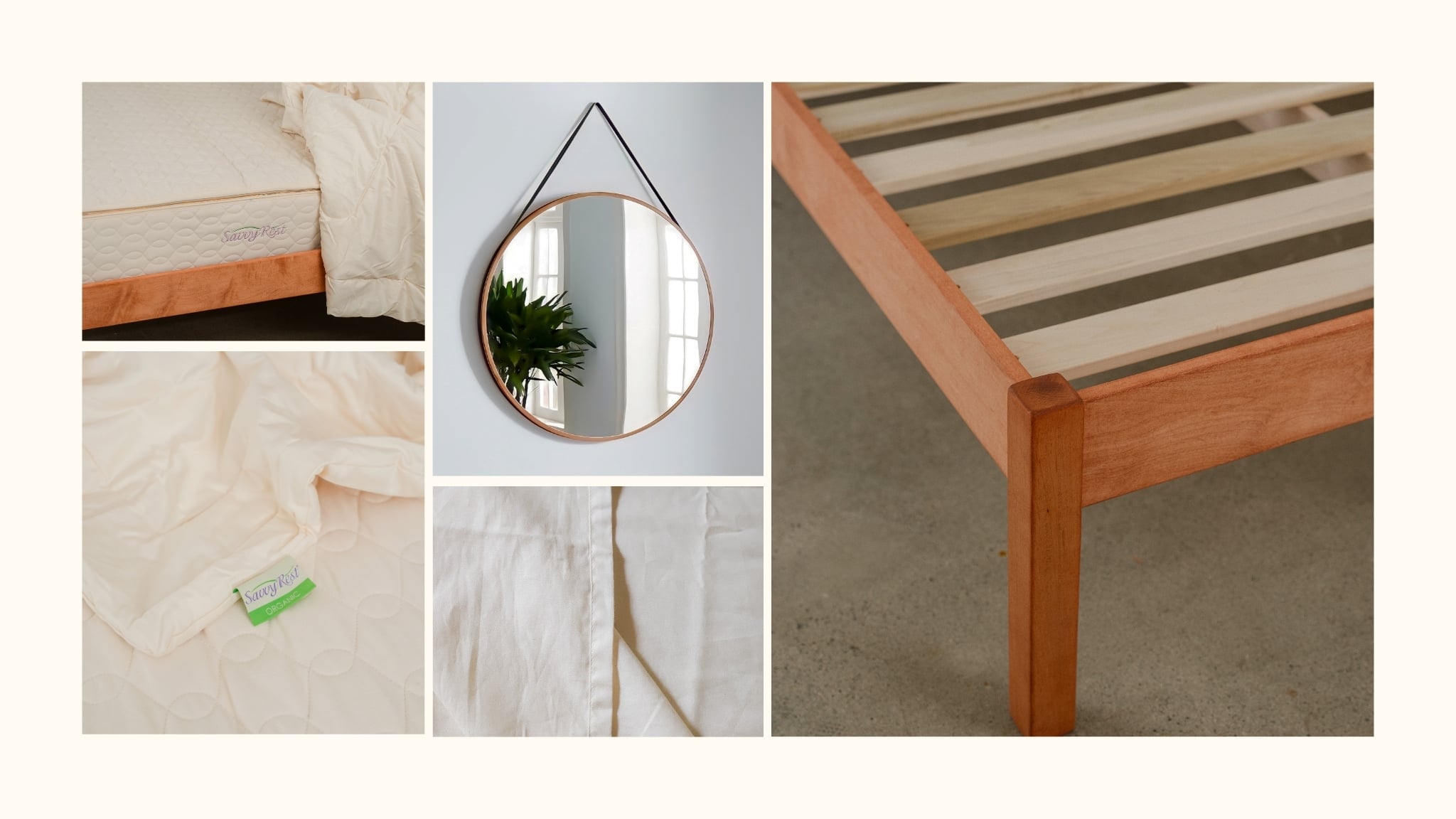
In feng shui, your mattress should also be comfortable so that it promotes restorative sleep–not too soft where you are sinking to the floor, but not too firm where your pressure points are aggravated. Again, in true feng shui fashion, it is about finding that balance between soft and firm when selecting your mattress.
Choosing organic materials that promote a healthy environment without toxic off-gassing is also imperative in feng shui.
We recommend choosing a customizable organic mattress that will allow you to control the feel of the mattress while also ensuring you are sleeping on natural materials. Opting for organic cotton sheets will also promote breathability, leading to a cooler and more comfortable sleep.
When considering a platform bed, opting for a natural wood bed with a solid rectangular headboard follows feng shui guidance. A headboard is important because it represents stability. Avoid headboards with slats since they can mirror the bars of a cage. Slatted headboards also can seep out your energy, making you feel depleted in the morning. It is even said in feng shui that if your headboard is not solid and sturdy, it can impact your romantic relationship, leading to emotional distance and insecurity. Instead choose a smooth headboard made of sustainably-sourced wood. This sustainably-sourced wood platform bed comes with a customizable headboard that you can choose to be solid.
Feng Shui Bedside Tables
Feng shui embraces symmetry to continue the focus of balance and harmony, and that comes into play with bedside tables. Both sides of the bed must have a matching bedside table, even if only one person is sleeping in the bed. There should be a slight space between the bed and the nightstands, and the nightstands should either be at the same height of the mattress or slightly shorter.
Avoid clutter on the nightstands since clutter represents stagnant energy, which can make you feel stressed and stuck. Do not place items under the bed, since you will be quite literally sleeping above clutter. Even beyond the feng shui practices, clutter negatively impacts your state of mind and can lead to restlessness, racing thoughts, and anxiety because clutter can make a space feel disheveled and suffocating rather than organized and open.
Feng Shui Artwork
Yes, even your artwork should be considered when creating a space that follows the principles of feng shui.
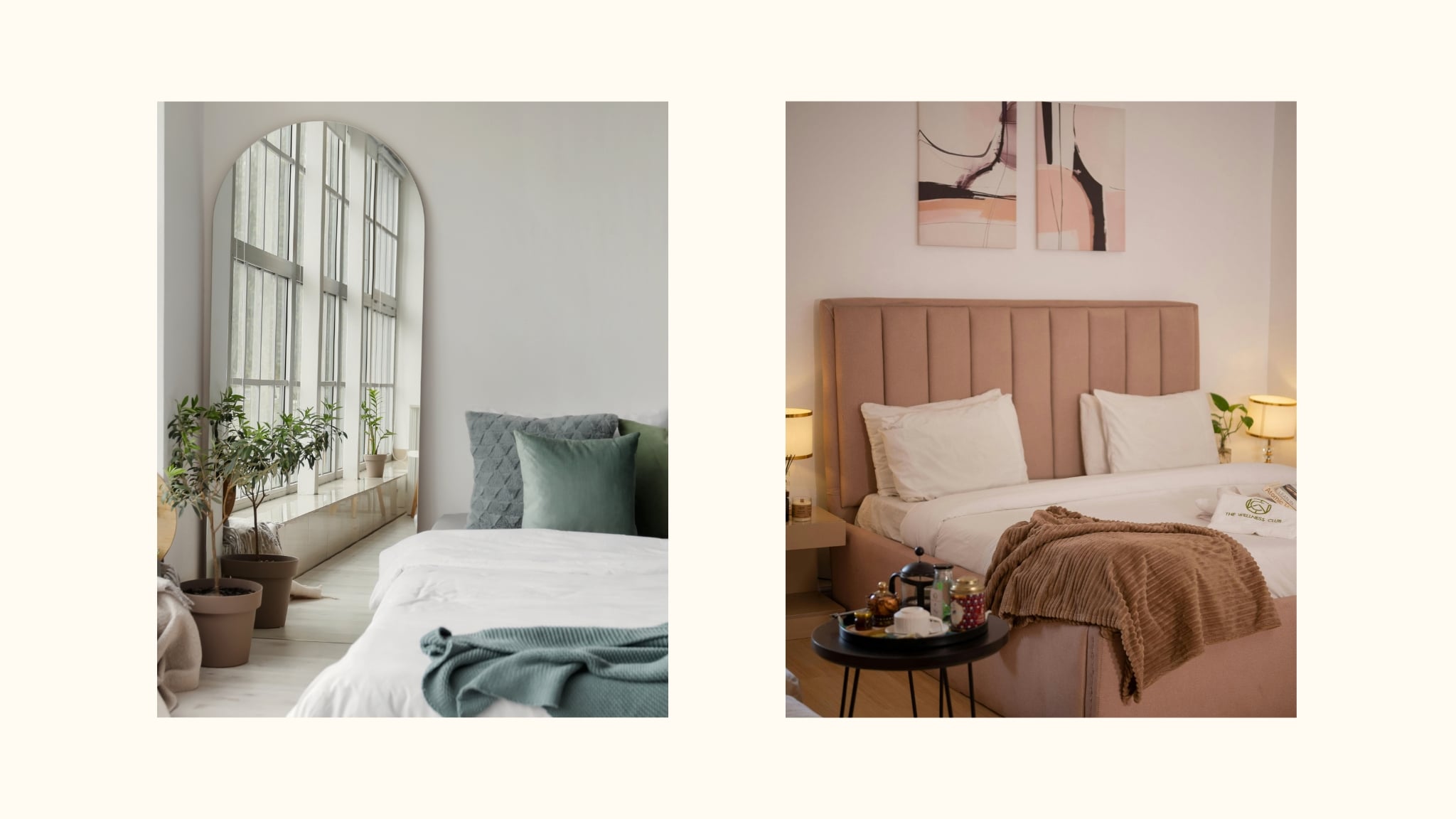
As we’ve established, feng shui loves balance, so artwork that depicts a couple in love or is a piece composed of two frames of the same size follows those lines of symmetry.
However, it can also simply be one image of a peaceful landscape or something that simply sparks joy.
Check out this in-depth explanation of the specific types of art pieces inspired by nature you should consider for your bedroom.
Bedroom Mirror
While it is popular to have a mirror in your bedroom, it is not recommended when embracing feng shui because it can either exude negative energy, or create too much stimulating energy which is counterproductive in a bedroom meant for rest.
However, if you must have a mirror in your bedroom, make sure not to place it directly across from the bed. Instead, hang it in a corner (such as alongside your bed) that is not facing a door, or you may hang a mirror in the closet that you can simply hide away when not in use by closing the closet door. Don’t give it power–your bed should still be the central focus of the room.
More Feng Shui Tips
Here are a few more things to consider when creating or updating your bedroom.
Minimize Electronics in the Bedroom
If you are truly following the principles of feng shui, you should have no electronics in the bedroom. However, we live in a time where it is very difficult to completely abstain. For example, it is challenging to wake up in the morning without an alarm, so either your phone or an alarm clock is the most effective way to wake up on time if you can’t simply wake up with the sun.
One major electronic device to remove from the bedroom is your television. Your bedroom should be a place to unwind and rest, not to get wound up while watching the Superbowl or scared during a horror film.
Remove or Fix Anything Broken
Have a lightbulb that is dead? Is the handle on your dresser broken? Broken items can represent struggles and stress in your own life. Repair what can be fixed and remove what is not salvageable so that you rid your space of the negativity.
Natural Materials for the Bedroom
We have already mentioned the importance of an organic mattress, platform bed, and sheets, but there are other ways to incorporate natural materials throughout your bedroom.
Use a wooden bowl for your jewelry.
Have a dresser made of sustainably-sourced wood instead of plywood.
Include a soft cotton rug underneath your platform bed instead of polyester.
Opt for a wool duvet insert that is breathable.
Declutter Your Bedroom
A messy bedroom is a messy mind and can drain your energy. Keep your bedroom neat, organized, and free from clutter. You can learn more about the importance of decluttering here.
Time to Feng Shui Your Bedroom
We hope these tips are helpful as you design your feng shui bedroom. Remember: Perfection is not the goal. Simply aim for a peaceful, tranquil place for you to rest at night, even if it means only updating a couple of elements at a time.